Why Pretend Play Matters: How Role-Play Grows Your Child’s Creativity
New research links rich make-believe in the early years to faster creative growth. Here’s what it found—and simple ways to invite more imaginative play at home.

A cushion becomes a castle wall. A wooden spoon becomes a magic wand. Your child announces that they are a dragon keeper, and suddenly you are being asked what dragons like for breakfast.
It can look like simple fun. It is fun. But it may also be one of the richest workouts for a growing imagination.
New research suggests that the kind of make-believe children play in their early years is linked to how their creativity develops as they start school. Here is what researchers found, and a few easy ways to make room for this kind of play at home.
1. What the research found
A 2026 study in the Creativity Research Journal asked a simple question: does pretend play predict how creativity grows later on? The researchers followed children from pre-kindergarten through first grade and looked at how their creative thinking changed over time.
Children with high-quality fantasy and role-play had 4.91 times higher odds of accelerated creativity growth across those years.
A study like this shows a link, not a guarantee. Pretend play isn’t a magic formula, and every child grows at their own pace. Still, it is a meaningful finding: the stories children invent in play seem connected to how their creative thinking develops.

2. What rich pretend play can look like
You don’t need a costume box or a perfect setup. Rich pretend play usually has a few simple ingredients: a role to step into, a world to imagine, and a story that keeps going.
A child might decide they are a ship’s captain, then let ordinary objects stand in for something else: a blanket for the sea, a laundry basket for the boat. They might give characters feelings and problems, then try out ways to solve them.
It often looks messy from the outside. Plots change halfway through. The captain becomes a mermaid. That’s part of it. Each change is a small creative decision.
3. Step into a role together
Children often play more deeply when someone joins in. You don’t have to be a natural performer. Take a small supporting part: the shopkeeper, the lost traveler, the friendly guard at the castle gate.
Ask questions from inside the story. “Captain, which way should we sail?” “Is this bridge safe to cross?” A question invites your child to imagine the next step, rather than waiting for you to tell them.
4. Let the story take surprising turns
When your child changes the plot, try following them. If the dragon suddenly wants to open a bakery, ask what it will bake. Saying “yes, and…” keeps the story moving and shows your child that their ideas are worth building on.
Small problems help too. The treasure map is torn. The bridge is missing a plank. A friendly giant can’t find his shoes. A gentle challenge gives your child something to solve, and solving it is where a lot of creative thinking happens.
Every “what if?” is a small act of imagination. Together, they add up.
5. Make room for it to grow
Rich pretend play usually needs a little time to get going. A five-minute burst is lovely, but stories often deepen when they’re allowed to continue. Leave a story open so it can return tomorrow: “Shall we find out what’s behind the castle door next time?”
Stories can also travel. A character invented at breakfast can come back at bedtime. A drawing of the dragon’s bakery can hang on the fridge until the next chapter.
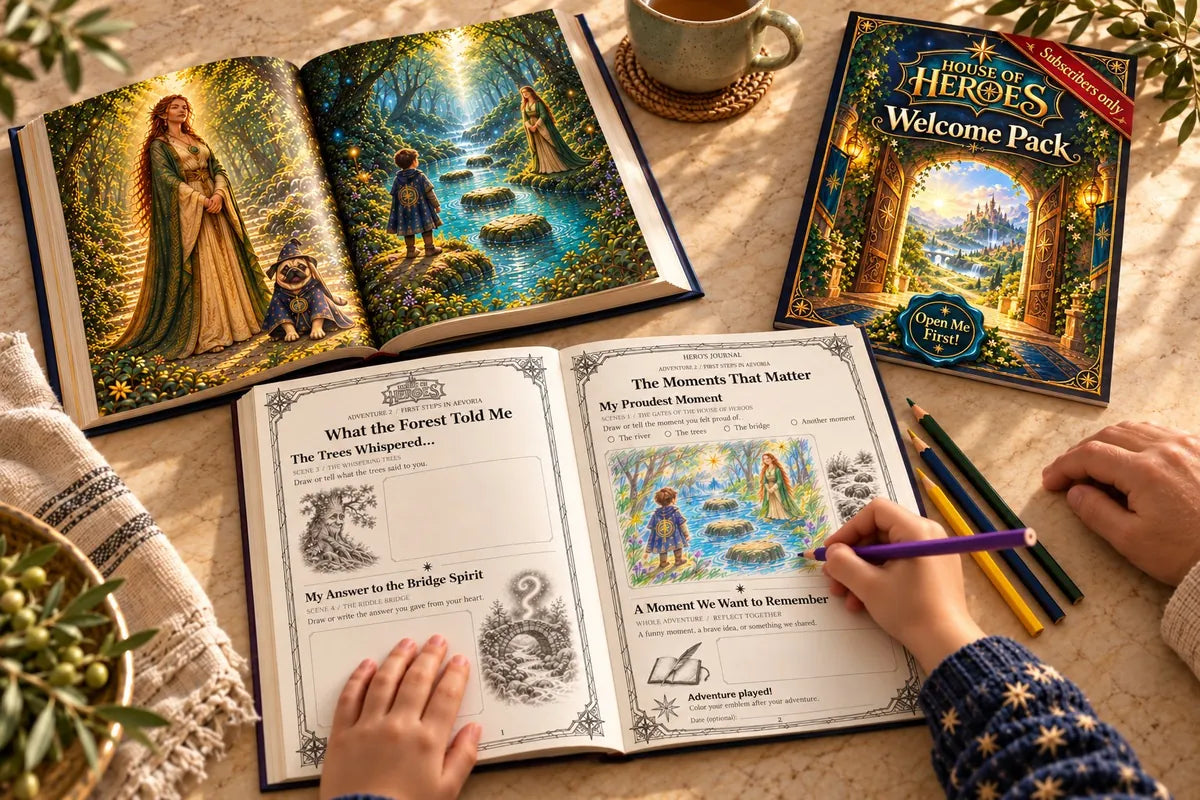
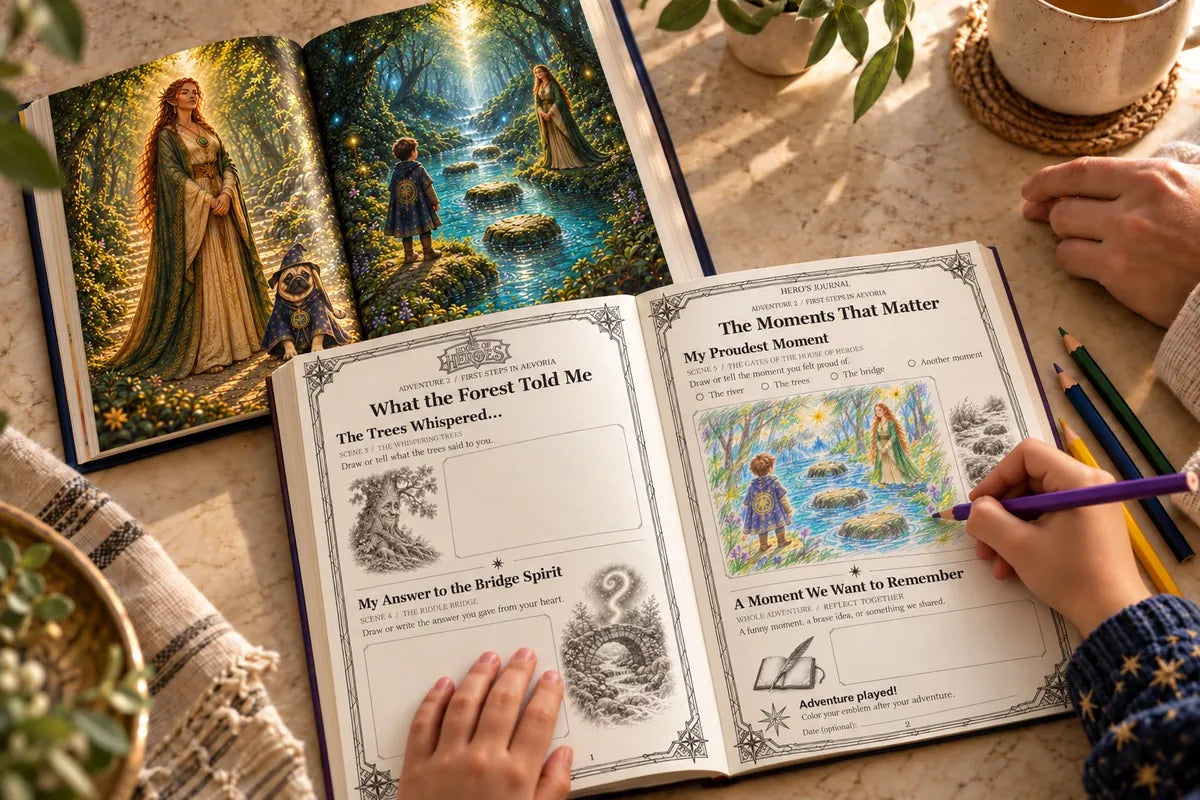
Shared stories help too. When you read together, pause to ask what your child would do in the hero’s place. When they get to choose, they stop being only a listener and become part of the adventure.
The play is the point
It is tempting to measure childhood in skills: letters learned, numbers counted, pages read. Those matter. But the research is a reminder that something that looks like “just playing” may be doing important work too.
So the next time the living room becomes a kingdom, take a seat on the throne, or at least ask what the dragon is having for breakfast.
You are not only joining a game. You are helping their imagination grow.