Ten Minutes Together: Turn an Ordinary Evening Into a Family Adventure
You don’t need a whole afternoon, a perfect plan, or a cupboard full of craft supplies. Start with a small invitation—and see where your child takes the story.

Some evenings, family time gets squeezed between dinner, unfinished jobs, and getting everyone ready for bed. By the time you have a moment together, planning an activity can feel like another task.
Try making the invitation smaller.
Ten minutes. A familiar room. One playful question.
You might become explorers looking for a missing treasure, builders crossing an imaginary river, or storytellers helping a lost creature find its way home. There is no finished project to produce. The point is to share a little world for a little while.
1. Choose a moment you already have
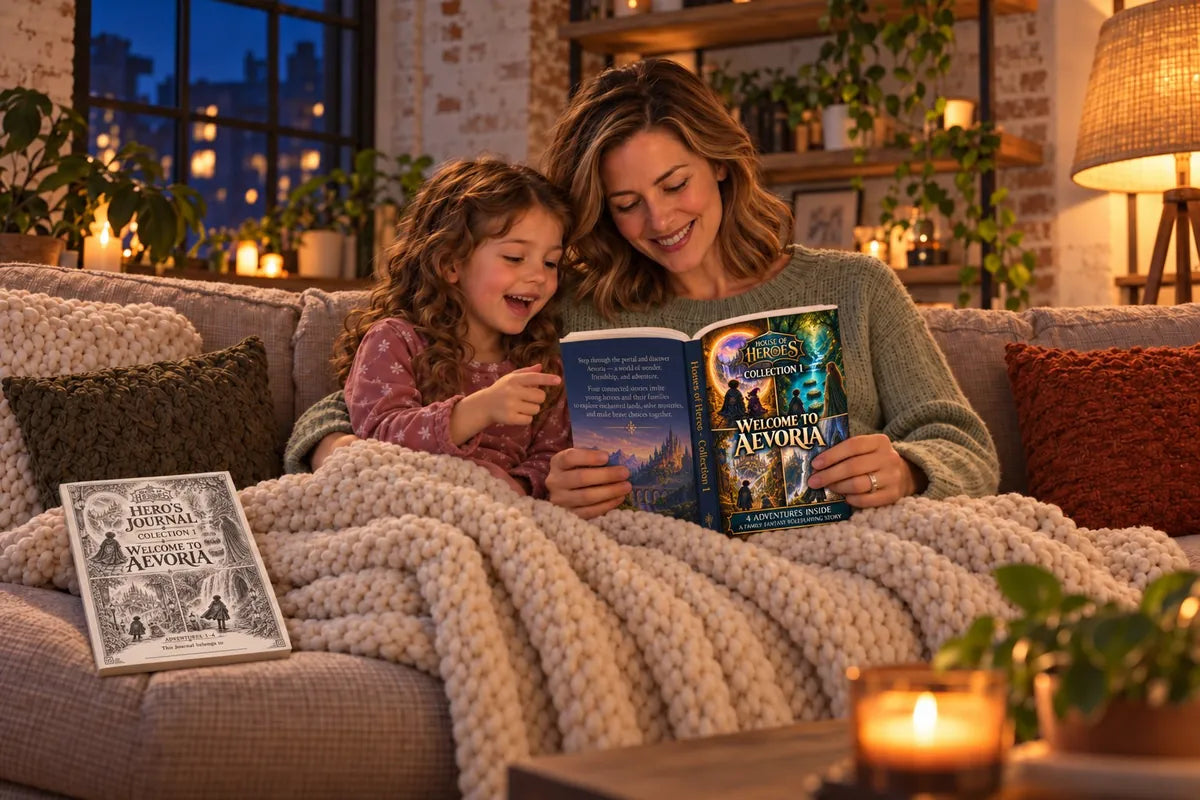
Look for a small pocket of time that fits your evening: after clearing the table, before bath time, or while everyone is settling onto the sofa. Choose a moment when you have enough attention to join in, even briefly.
You don’t have to make this a daily commitment. Begin with one evening and keep the invitation easy: “Shall we have a tiny adventure before we get ready for bed?”
If your child would rather draw, talk, or sit close, follow that preference. A shared moment does not need to look like an activity to count.
2. Begin with one playful question
A question can open the door without giving your child a long list of instructions.
“What if this cushion were an island?”
“Who might live behind that tiny door?”
“How could we help a dragon who has lost its favorite story?”
Offer one idea, then pause. Your child might take it somewhere unexpected. The dragon could turn into a rabbit, the island into a bakery, or the adventure into a drawing session. You can join their version rather than steering it back to yours.
3. Let ordinary objects join the story
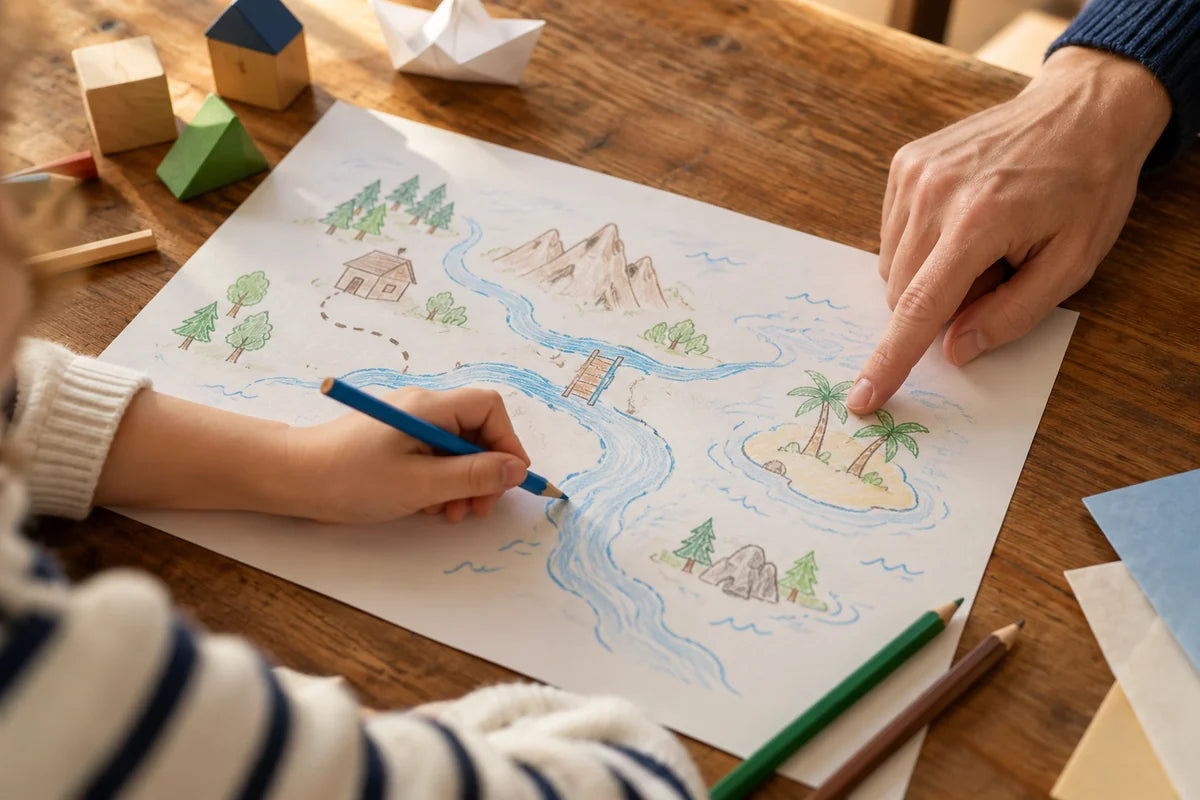
Use what is already nearby. A wooden spoon can become a paddle. A cushion can mark an island. A paper drawing can show a path through a forest. You only need one or two things to give the story somewhere to begin.
Invite your child to decide what the objects mean. A block might be a bridge in your imagination and a sleeping giant in theirs. That difference gives you something to explore together.
Keep the setup small enough that clearing it away will be easy. An adventure that takes two minutes to begin is easier to welcome on an ordinary evening.
The adventure can be small. Your attention is what makes it shared.
4. Give everyone a part
You don’t need to perform or invent an elaborate character. You could be the traveler who needs directions, the builder holding the bridge, or the companion who asks, “What should we try next?”
If siblings are joining, offer different ways to take part. One can draw the map, another choose the destination, and someone else make the sound of the river. A child who prefers watching can be the person you ask for an idea when they feel ready.
Listen for the moments your child wants to lead. Following a surprising suggestion can be more enjoyable than getting through the story you first imagined.
5. Finish with a small ending
When it is time to stop, help the story find a gentle pause. The travelers could reach their campsite. The lost creature could find a place to sleep. The bridge could be ready for tomorrow’s crossing.
Then ask one simple question: “What was your favorite part?” You can share yours too. It might be a funny voice, an unexpected idea, or the moment everyone worked together.
You don’t have to save every drawing or promise a sequel. If your child wants to return to the story, a folded map or a remembered character is enough. If not, this evening’s little adventure is complete.
Keep the invitation gentle
Some days, ten minutes will turn into twenty. On others, the invitation will last two minutes before someone needs a snack or a rest. Both are fine.
The next time you find a little space in the evening, start with what you have: a question, an ordinary object, and a willingness to see where the story goes.
You might never leave the living room. You can still go somewhere together.